Polanski says it is ‘unacceptable’ that people will face ‘enormous spike’ in costs due to Iran war
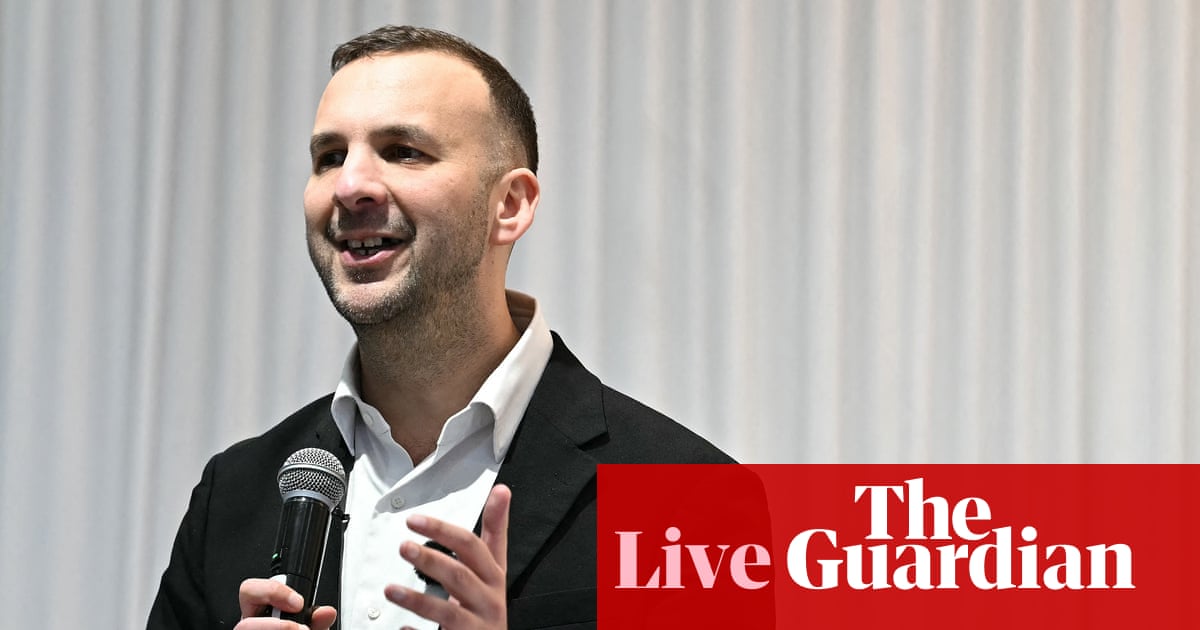
Polanski is speaking now.
He starts by talking about the Iran war, describing it as a war of choice.
This was not a war of self-defence, there was no imminent threat. Negotiations were ongoing. It was, as the BBC’s international editor said, a war of choice.
People across the Middle East are terrified of what Trump and Netanyanhu’s war will mean for them and their loved ones. And the repercussions are echoing across the world as instability spreads and oil prices spike.
He says ordinary people will pay the price for this.
People are already struggling so hard just to make ends meet. People feel like they’re running every day just to stay in the same place. The idea that yet again – for the second time in just a few years – that we are going to have to deal with another enormous spike in the cost of the basics is unacceptable.
It’s unacceptable because we didn’t need to be here. It’s unforgivable that just four years after we last saw an energy price shock, that one triggered by Putin’s illegal invasion of Ukraine, far too little has been done to protect this country, its people, and its economy – from the impact of yet another energy price shock.
Key events
Polanski says wealth tax would be ‘day one priority’ for Greens
Polanski turns to tax, and says that a wealth tax would be a priority for the Greens.
We know that a wealth tax won’t fix everything, and no one’s ever pretended it would, but it’s a good place to start. Implementing a 1% tax on wealth over £10 million and 2% over £1 billion would raise around £15 billion per year – and send a very clear message that those who have accumulated the most money, will pay a little bit more – and get that money flowing through the economy, and benefiting everyone.
For a truly progressive government a wealth tax should be a day one priority.
And the Greens would cut energy bills, Polanski says.
We need to cut energy bills. We need to massively scale up our investment in clean energy infrastructure to secure our energy independence and increase our resilience as a country. And in the shorter term we should stop the price of gas inflating the price of electricity, ending the possibility for gas plants to charge high prices when gas-fired electricity is needed to make up an energy shortfall.
Polanski says Greens would nationalise water companies, claiming this would ‘bring down bills’
Polanski says the Greens would nationalise water companies to cut bills.
Nearly a third of the typical water bill in England goes to funding shareholder returns and debt servicing, compared to around ten per cent for publicly owned Scottish Water.
That’s shocking – hundreds of pounds every year that people work hard to earn, going straight into shareholders’ coffers. Let’s end private ownership of water, bring down bills, and make our water system fit for purpose.
Polanski says Greens would bring in rent controls, saying they work in 16 other European countries
On cost of living, Polanski starts by saying the Greens would bring in rent controls.
We know that rent controls can work, and we can learn so much from the different models that have been tried elsewhere. Rent controls are an established part of private renting in 16 European countries and it couldn’t be clearer that the UK’s got some catching up to do.
If we had frozen rents in autumn 2022, households in Britain would be saving over £3,300 per year on average. Across Britain, that would put £18bn of purchasing power back in the pockets of ordinary people – money that could be spent in local businesses, buying a coffee on the way to work or a few pints at the end of a hard week.
Polanski says the Greens’ victory in the Gorton and Denton byelection showed how strongly people want a different approach.
He says he will cover three aspects of his party’s plans in his speech today.
I’m going to talk to you about the three central planks of our plan: tackling the cost of living crisis and bringing down inflation; overhauling our tax system so the uber-wealthy pay their share; and modernising fiscal policy so it’s fit to tackle the challenges of today.
Brexit has been ‘sledgehammer to an already weak economy’, Polanski says
Polanski turns to Brexit.
The evidence of the impacts are clear. Employment down, Investment down, productivity down. The economy is 6-8% smaller than it would have been. Hundreds of pounds added to the average household’s shopping bill. Leaving the EU has been a sledgehammer to an already weak economy.
Polanski calls for more compassion in society, saying it’s ‘literally been privatised’
Polanski says politicians should be talking about compassion more.
Now look, other politicians may shy away from talking about compassion but it’s what we need to bring back into our societies. And it’s literally been privatised.
We only need to look at the scandal of privately owned children’s homes. A report by the Competition and Markets Authority was unequivocal. It said that ‘the largest private providers of placements are making higher profits than we would expect if this market were functioning effectively.’
If ever there was a sign of a sick economy, one which lacked care, had been stripped of compassion – this is it.
‘It’s clear we’ve rewarded greed and punished compassion for too long,’ says Polanski
Polanski turns to the rise in the number of billionaires in the UK.
In 1990, when I was going through primary school, and there were 15 billionaires in the UK. By last year, that number had risen to 154. And let’s look at how those people are making their money: today, more than 1 in 4 billionaires draw some or all of their wealth from property and inheritance.
That is money being made, not by putting anything into the economy, like running a businesses, creating jobs or making a product – but simply from sitting on assets or charging somebody else for the use of them.
It’s clear that we’ve rewarded greed and punished compassion for too long.
Polanski says it was not just Thatcherism that led to today’s problems.
The damage didn’t end with Thatcherism. Instead, that damage was turbocharged by austerity after the crisis of 2008 hit.
Cloaked in misleading analogies about maxed-out credit cards and household budgets, austerity was not a solution to the crisis, but a project which used the crisis as an opportunity to facilitate an enormous upward transfer of wealth from the many to the few.
Public spending eviscerated – look at local government for example. When accounting for population growth, spending power fell 27.5% in real terms between 2010 and 2020. In real words, that’s our libraries, our parks, the public services we all rely on …
This sustained project of privatisation and deregulation turned Britain from a place which made things people need to a place which made money for people who owned things
Polanski says Greens would ‘end right to buy completely’
Polanski turns to housing.
One in six private renters is now renting a former council home, often at extortionate rates – and often partly paid for by the government in the form of housing benefit. Another example of a system which is not only totally unfair but utterly incoherent …
So we need to end right to buy completely. Build more council homes. And control rents so everyone can afford a decent roof over their heads.
Polanski says, before he explains what he would do to end “rip-off Britain”, he wants to explain how we got here.
He describes growing up in the 1980s, and says Margaret Thatcher’s privatisation policies were a cause of what has gone wrong today.
The month I was born, Salford docks shut down – 3,000 dock workers losing their jobs.
By that time, 400,000 council homes had already been sold off under right to buy. And as I was growing up, Thatcher was selling off the state’s vital assets one by one – British Gas in 86, water in 89. When I talk to young people about this, they can’t believe it. We used to own these things, and we sold them off.
We know the impact of those changes. By the time the Tories left office, over £60 billion’s worth of precious state assets had been sold. A bonfire sale of our water, our energy, our railways – and so many other fundamental services – meant UK Public Wealth went from the Highest in the G7 to the Lowest, just over those two decades.
The consequences of this rigged economy for British people are still with us today – biting at our heels as we try to make ends meet.
And he cites the water industry as a particular example of where privatisation has gone wrong.
Nature isn’t separate from our economy. It is the foundation of the economy. And right now we’re letting it be destroyed – and for what? For shareholder returns.
Polanski says we live in rip-off Britain.
Other countries have been able to learn the lessons from previous crises and prepare – why is our response so weak when disaster strikes?
The answer, put simply, is that we live in rip-off Britain: an economy built to reward the few off the work of the many. A country where people work so hard and try to do the right thing but still struggle to afford the basics, and people find themselves constantly cutting back.