Why should a surge in sexually transmitted infections (STIs) in Europe be a concern across Africa or for people who don’t consider themselves to be at risk? Because it points to a bigger problem: the ease with which drug-resistant infections are now spreading, and not just in hospitals but within the community too.
The speed and scale at which people travel and interact in our interconnected world is increasingly helping to drive this, allowing drug-resistant pathogens to move rapidly through populations and across the world – including between high-income countries and low- and middle-income countries (LMICs), where the burden is often greatest and surveillance more limited.
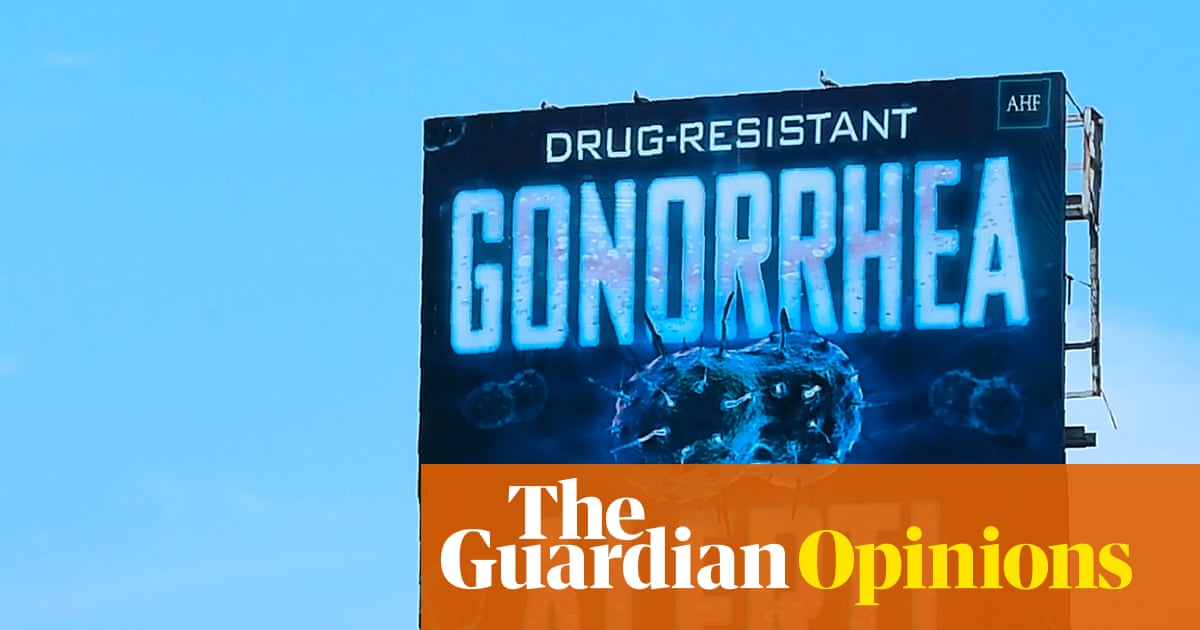
For evidence of this we need to look no further than the unprecedented spike in cases of drug-resistant gonorrhoea infections. With 82m new cases of gonorrhoea globally in 2020 – the majority in LMICs – we are seeing a growing number of these infections becoming more difficult – and in some cases almost impossible – to treat, as antimicrobial resistance (AMR) erodes the effectiveness of the antibiotics that once kept them in check.
Health systems in many LMICs are already under strain, making the consequences of untreatable infections particularly severe. This resurgence should be taken not as an anomaly but as an early warning sign for how other drug-resistant infections are also spreading all around us.
Too often, drug resistance is framed as a problem confined to hospital settings – threatening those in intensive care units or cancer wards. But the bacteria that cause these infections do not stay neatly within clinical settings, and nor do they necessarily originate there. They move with and among us – across cities, across borders and across continents – carried not only by those who are infected, but also by those who are unwittingly colonised.
While STIs require sexual contact to spread, drug-resistant bacteria can pass through far more routine interactions or persist on surfaces and objects long enough to travel with us. In a world where billions of journeys are made each year, where migration, travel and trade are constants of modern life and where increasing numbers of people live in dense urban settings, particularly in rapidly growing cities in LMICs, that is a concern. It means AMR is able to circulate globally and spread among us with remarkable ease.
This is what is now happening with gonorrhoea through sexual contact, as extensively drug-resistant strains detected in Cambodia have spread as far afield as France and Australia. This is particularly worrying because Neisseria gonorrhoeae has developed resistance to the antibiotics used to treat it, with only one last remaining recommended antibiotic, ceftriaxone, available. With a growing number of cases that are resistant even to this, gonorrhoea is in danger of becoming one of the first diseases to be no longer treatable.
While this is also happening with other drug-resistant bacteria, it is often not until they reach hospitals that they are detected. But they are out there and spreading. A gene that renders bacteria resistant to last-resort antibiotics was first identified in the 1990s and quickly moved between countries until it became established all over the world within little more than a decade.
Drug-resistant infections can flourish and become entrenched in hospitals. But evidence now shows that drug-resistant infections such as methicillin-resistant Staphylococcus aureus (MRSA) acquired in everyday environments are also becoming more common – and more dangerous, particularly for vulnerable groups such as cancer patients. In LMICs, where outpatient care plays a larger role and infection prevention resources are limited, the risks amplify.
Large studies report high rates of drug-resistant infections among cancer patients receiving outpatient care, with infections such as pneumonia occurring far more frequently and carrying a significant risk of death.
Taken together, this signals a broader shift in the threat, which has important implications for how we should respond. Better antibiotic stewardship curbs their overuse and inappropriate use, one of the main drivers of AMR. But while many governments are attempting to introduce such measures, stewardship and infection control alone cannot address a problem.
For a growing number of infections, particularly the most difficult to treat and deadly, resistance is now outpacing antibiotic development. Drugs are being lost faster than they are being replaced, with one in six bacterial infections now resistant to first-line antibiotics.
This is a major blind spot in the global AMR response. The problem is that the traditional commercial model for research and development is geared towards developing the most profitable antibiotics, and so has repeatedly failed to deliver those that we most need – particularly for populations in LMICs, where the need is greatest but expected returns are lowest.
after newsletter promotion
A new model is needed to ensure we get the right antibiotics, and the development of zoliflodacin shows how this can be achieved. This first-in-class antibiotic for multidrug-resistant gonorrhoea is the first new treatment to be developed solely for this disease in decades. Its development using a not-for-profit model, led by the Global Antibiotic Research & Development Partnership and partners, shows that the antibiotics we need can be created as global public health goods – prioritising access, stewardship and sustainable use across all countries, rather than profit margin.
In the coming years we are going to need them, because AMR has reached a tipping point. There are nearly 5m AMR-related deaths each year, and this is expected to rise by 70% by 2050.
What makes this moment especially dangerous is not just the scale, but where the threat now lies. As drug-resistant infections take hold in the community, the boundary between everyday life and high-risk settings is disappearing. Ordinary interactions – at home, at work, in public – are becoming pathways for infections that are increasingly hard to treat.
Unless we act, we risk a future in which common infections can no longer be reliably treated, and where the consequences are felt far beyond hospital walls.