I sometimes think of the former EU home affairs commissioner Ylva Johansson, who just six years ago spoke of crafting a European migration policy with “cool heads and warm hearts”. What’s happened since is the exact opposite.
Governments across Europe – with the exception of Spain – are cracking down harder than ever before on migrants through measures they once dismissed as politically toxic. It is a dream come true not only for the EU’s far right but also for mainstream conservatives and centre-left politicians such as Denmark’s Mette Frederiksen.
The latest version of the EU migration and asylum pact, expected to become operational on 12 June, includes the building of offshore processing centres and third-country deportation hubs, and gives governments expanded detention powers – including the right to detain children – and the authority to fast-track removals.
The new deportation rules will enable what more than 80 human rights organisations call “ICE-style” detection, raids, detention and offshore return practices across Europe. Mélissa Camara, a Green MEP, quite rightly calls the pact a “legal arsenal serving a xenophobic ideology”. Undeterred by the critics, however, the European Commission president Ursula von der Leyen keeps partnering with strongmen and authoritarian governments. The EU is in effect paying them to keep out unwanted migrants.
The unsavoury circle with which the EU is prepared to do business has now widened to include the Taliban. For the first time, the EU Commission’s home affairs directorate is preparing to host talks in Brussels with a delegation of Taliban representatives from Afghanistan. Against warnings that the invitation risks legitimising a regime the EU does not even formally recognise, officials insist that the discussions are merely “technical”, and that it is important to maintain contact with the Taliban on aid delivery and women’s rights.
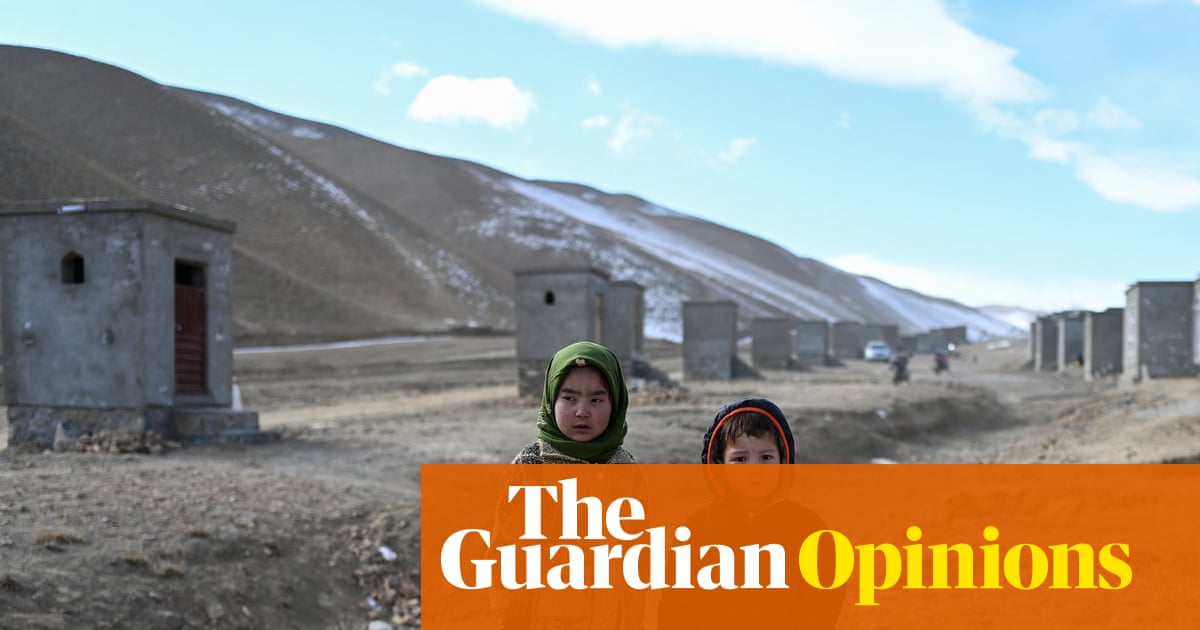
But these talks are not about the sweeping restrictions on women’s rights, including bans on secondary and higher education for girls and women, limits on women’s employment and restrictions on access to public spaces that the Taliban have imposed since returning to power in August 2021. They are about forcibly deporting asylum seekers whose claims to protection in Europe have been rejected – deportation to a country where returnees face arbitrary arrest, detention and torture, and which is in the midst of a food crisis.
What begins with migrants does not end with migrants, however. History has taught us that once political elites convince people that some human beings deserve fewer rights, less protection and less empathy than others, the circle of exclusion keeps expanding to include all of us.
I fear this is already happening. Over years of observing the EU, I have witnessed it move from migration management to deterrence and now to deportation, or rather remigration – a term that once caused public outrage but now is discussed at summits and has slowly seeped into mainstream policies. No wonder when far-right leaders are themselves around the summit table.
EU political elites tend to hide their harshest policies behind bureaucratic language and references to administrative necessity. Cash-for-migration deals are referred to as “partnerships”, deportation becomes “return management”, and those being forcibly sent home are cast as “criminals”, “illegals” or “irregular”.
The dehumanising language is meant to shift attention away from rights and dignity toward control, deterrence and enforcement, thereby making it easier to justify detention, pushbacks, accelerated procedures and collective suspicion.
Behind such actions, however, is what the European Network Against Racism calls an “imagined whiteness”, a political construct that defines who naturally belongs to Europe and who remains a permanently suspect outsider. The language of demographic threat, cultural replacement and civilisational survival has become increasingly familiar on both sides of the Atlantic, a point also made forcefully by the historian and anti-racism scholar Ibram X Kendi.
It is all connected. The same Europe that has rightly embraced Ukrainian refugees with open arms is engaged in illegal pushbacks against those from war-stricken countries in the global south. The same EU institutions that are talking to the Taliban about deportations have spent more than two years doing little to stop Israel’s genocide in Gaza.
Politicians who speak passionately about defending the rules-based international order when it comes to Ukraine have responded meekly to the illegal US-Israeli war on Iran and engaged in little more than diplomatic theatre when European citizens on Gaza aid flotillas are detained, mistreated and humiliated by Israel.
These issues are not identical, but they are connected by a common EU willingness to engage in a selective application of its rules and principles depending on who is affected. Yet as history has shown, once exceptions become normal they acquire a momentum of their own.
We can already see this happening when pro-Palestine protesters are increasingly portrayed as security threats, police violence is normalised, and universities are pressured to monitor debate and marginalise those who dare speak up. Today in Europe, journalists and human rights advocates face intimidation and charges of antisemitism when they criticise Israel, and humanitarian organisations are criminalised for preventing migrants’ deaths at sea.
European societies do face the genuine pressures of rising inequality, housing shortages and overstretched public services. Instead of tackling these problems, our politicians are choosing the easier path of demonising refugees, migrants and minorities.
For much of my professional life I believed that, whatever their flaws, EU institutions remained anchored in a commitment to democracy, human rights and the rule of law. I believed there were mechanisms for self-correction. That trust has become harder to sustain.
But I have learned that what begins with Palestinians does not end with Palestinians. The absence of generalised outrage at the planned meeting with the Taliban is a reminder that when the shocking becomes mainstream, all of us – regardless of our race, religion or background – are potential targets.
-
Shada Islam is a Brussels-based commentator on EU affairs. She runs New Horizons Project, a strategy, analysis and advisory company